Experienced game studio
Founded in 2013, Thoughtfish has built its identity around immersive, context-aware games and technology.
A living Victorian mansion where players explore, search, bargain, betray and try to escape before the Library turns on them.
Built from the world of the Horror in the Library board game, Book of Souls transforms proven social tension into a digital experience for PC and Steam Deck. Search rooms, uncover secrets, collect powerful advantages, trigger curses, awaken monsters and decide exactly when trust should end.
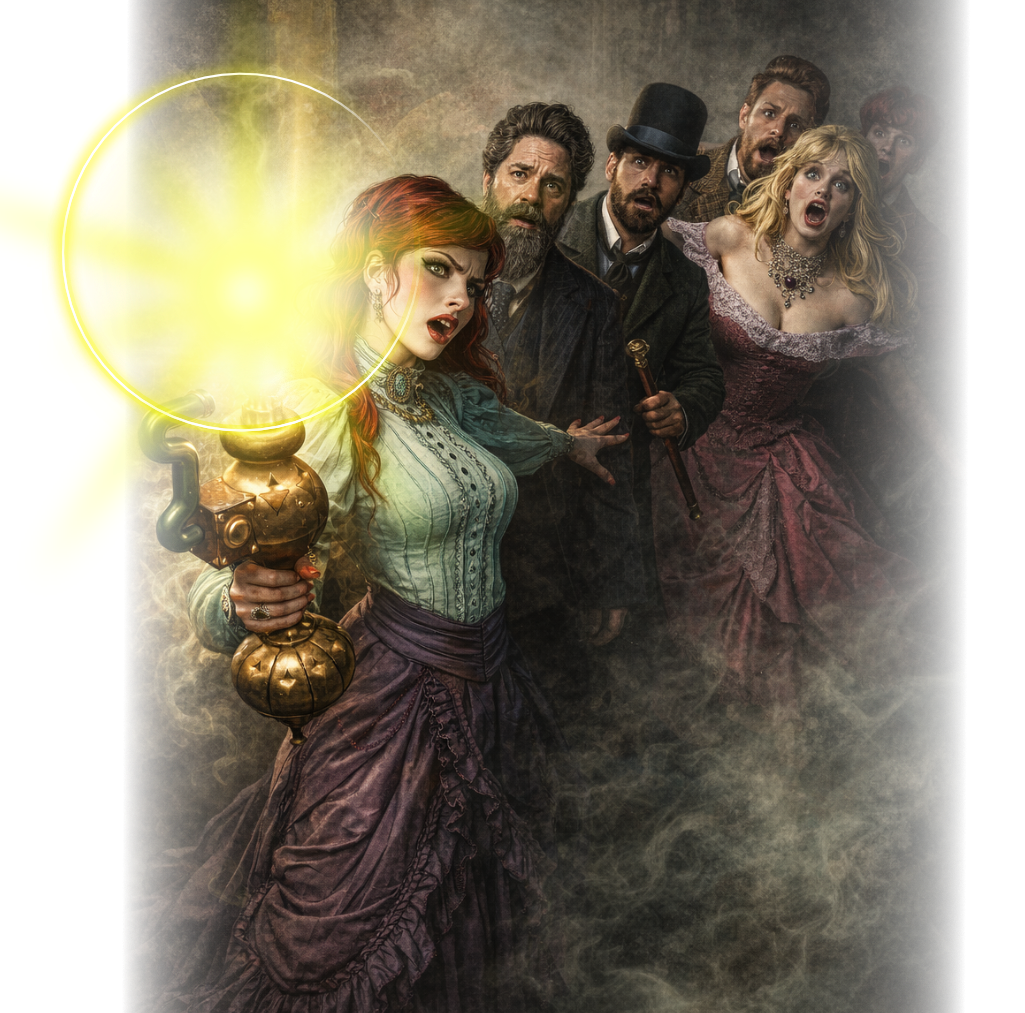

Horror in the Library: The Book of Souls is now being developed in partnership with Thoughtfish, the Berlin-based game development studio.
Visit Thoughtfish.deThoughtfish brings a strong production partner to the next phase of Horror in the Library. Their team help to make Thoughtfish a pioneer in real-world gaming and develops games and gamified apps that can react to players’ surroundings and context through their proprietary COALA technology.
For The Book of Souls, this partnership strengthens the project with an experienced Berlin studio that works across game development, UX/UI, monetisation design and concepting, front-end and back-end development, middleware, 2D/3D art and animation.
Founded in 2013, Thoughtfish has built its identity around immersive, context-aware games and technology.
The studio develops games across mobile, VR, MR, PC and console platforms.
Their team covers design, engineering, middleware, UX/UI, monetisation, 2D/3D art and animation.
Thoughtfish is headquartered in Berlin, giving the project a strong European development partner.
Book of Souls is not starting from scratch. It grows from a board game world already proven with players at live events, public demos and convention tables. The digital adaptation keeps the heart of that experience — greed, suspicion, risky searching, shifting alliances and sudden disaster — while expanding it into a richer multiplayer mansion full of new possibilities.
Explore the strange home of the Mad Professor in a top-down multiplayer experience designed for suspense, discovery and repeat play.
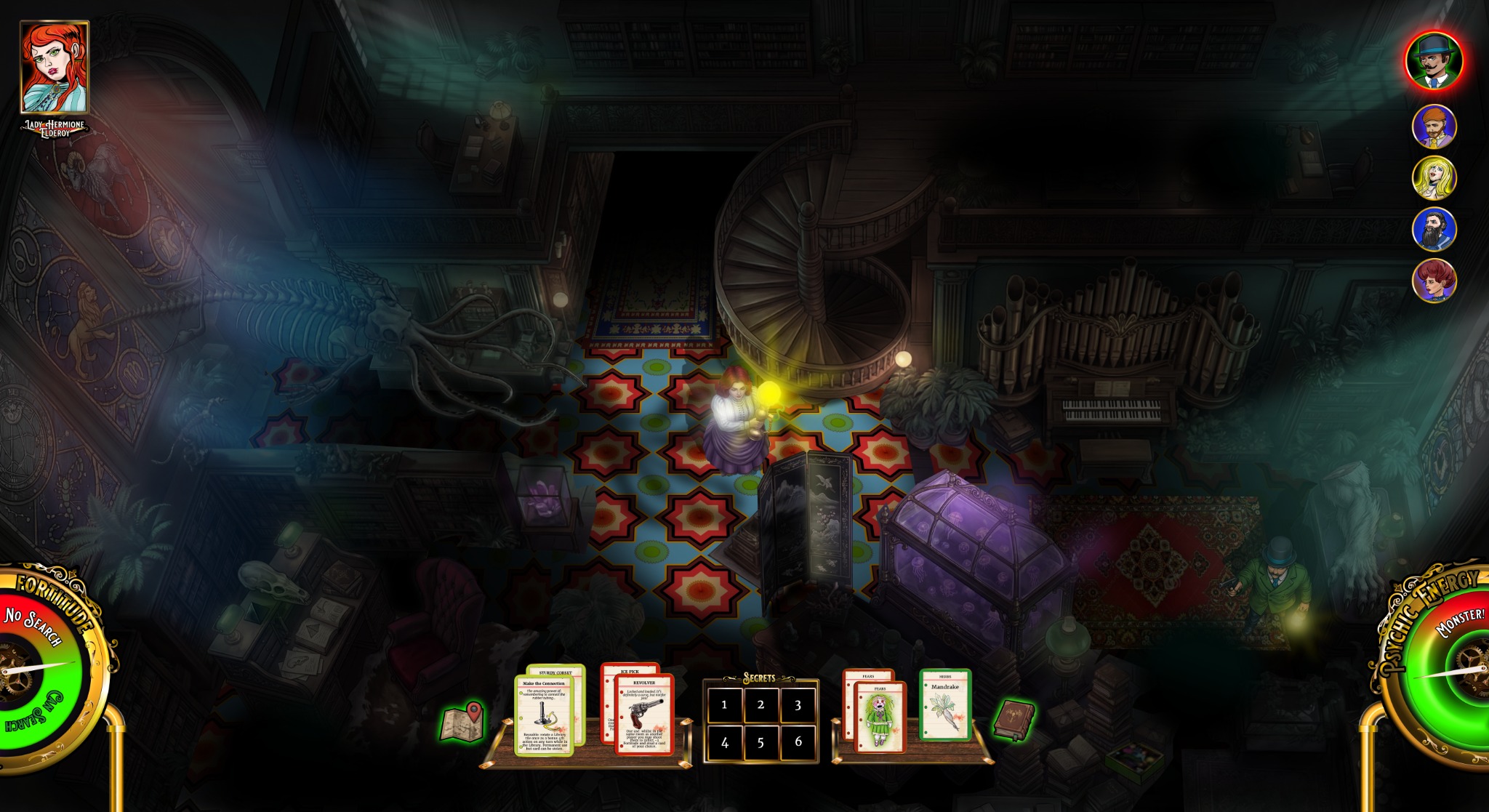
Rooms reveal opportunities, shortcuts, hazards and surprises. Every layout creates new routes and new risks.
Search too aggressively and you may hand the advantage to someone else — or unleash new danger across the mansion.
Use blessings, curses, items and timing to stay ahead of both rivals and monsters.
Every match begins with exploration and discovery, but the mansion never stays calm for long. Players reveal rooms, search for advantages, gather tools and push deeper into danger. The more greed, risk and rivalry take hold, the more unpredictable the session becomes.
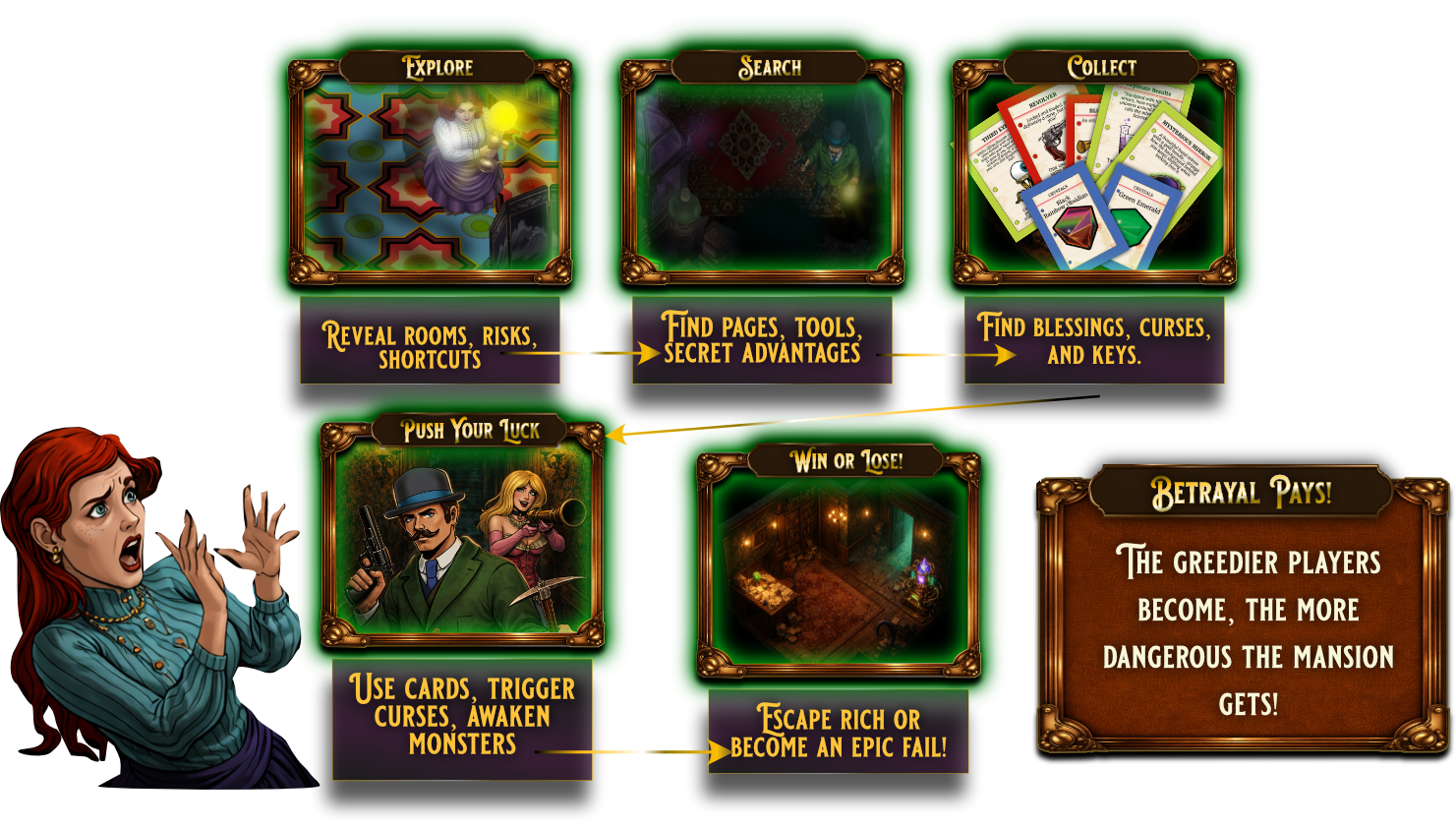
Reveal rooms, routes, risks and shortcuts as the mansion opens up.
Dig for pages, tools, secrets and tactical advantages — but every search can change the balance.
Gather blessings, curses, keys and useful items that shape your path to victory.
Use cards, trigger effects, awaken monsters and decide how far you dare go.
The greedier players become, the more dangerous the mansion gets.
Book of Souls benefits from something many original game pitches do not have: a tested gameplay foundation, a recognisable world and years of audience-facing development behind it.
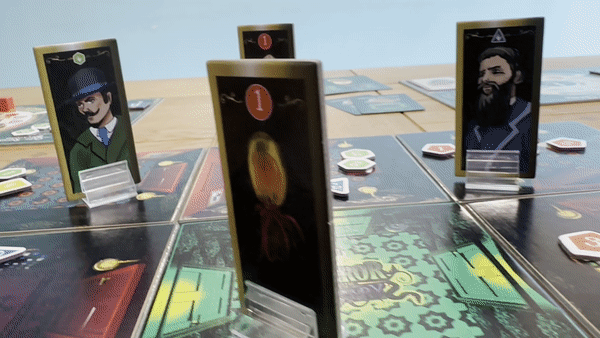
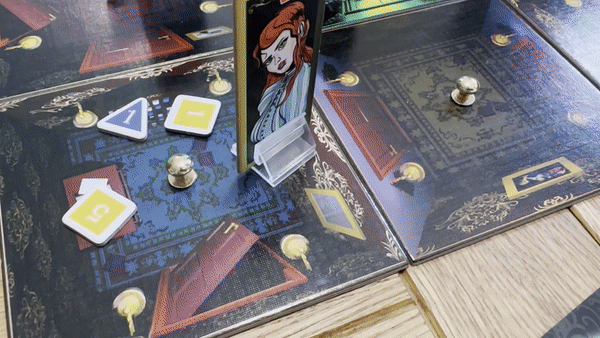
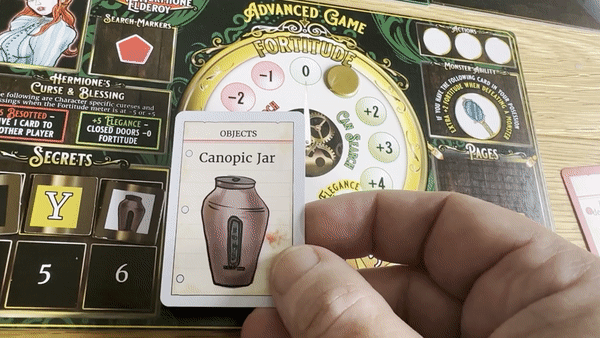
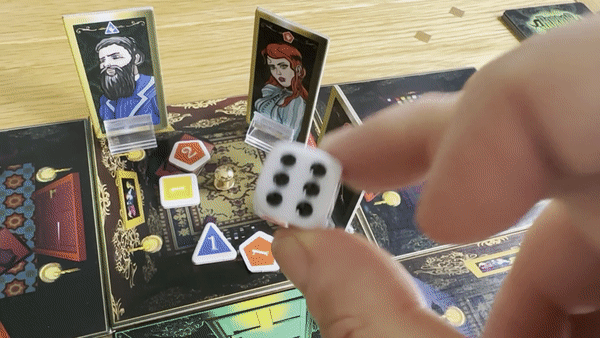
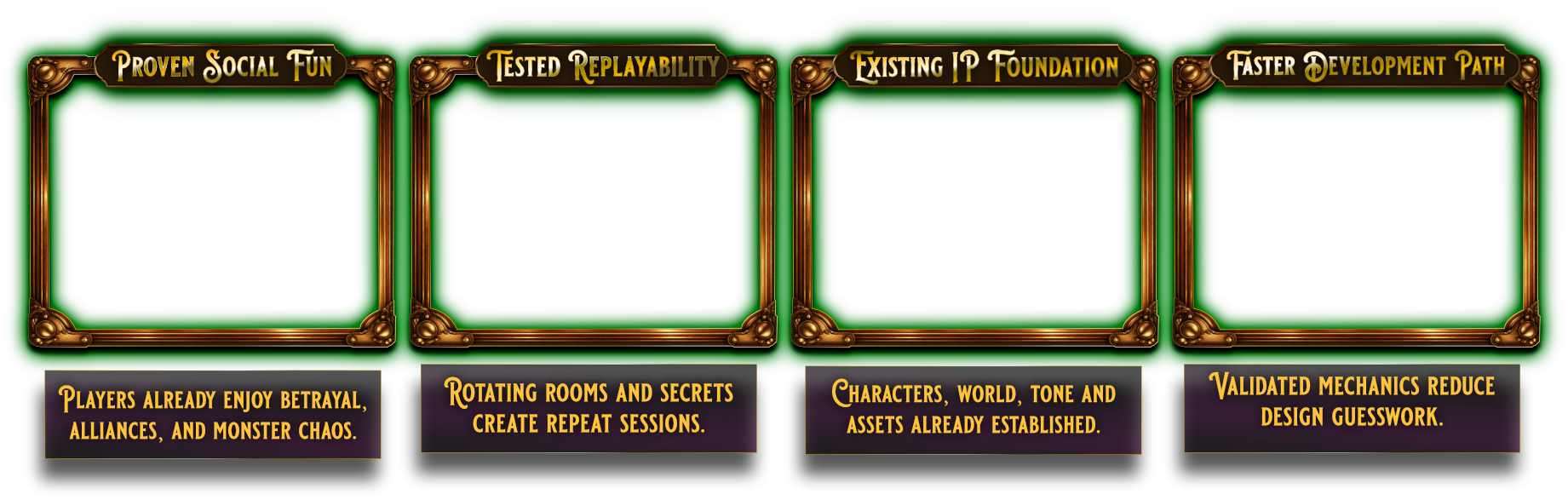
Players already respond to greed, suspicion, alliances and monster chaos. The social core is not theoretical — it has been played, demonstrated and refined in public.
Rotating rooms, changing secrets, unpredictable behaviour and shifting priorities create sessions that naturally play differently each time.
Characters, worldbuilding, visual tone, lore and gameplay language are already established, giving the project a clearer identity from the start.
Validated mechanics reduce design guesswork. The digital game can focus on expanding the experience rather than inventing the concept from zero.
At its best, Book of Souls creates the kind of session players want to talk about afterwards: sudden reversals, risky bargains, accidental disasters, selfish plays and dramatic escapes.
Search too greedily, trigger too much chaos or make too much noise and the danger rises for everyone.
Co-operate when needed, compete when it counts and betray only when it pays.
Different rooms, different secrets, different players, different disasters.
The tension, atmosphere and character of the board game world are carried into a new digital form.
The planned model is premium-first and player-friendly, with no pay-to-win. Future growth can come through new rooms, episodes, character packs, seasonal events and cosmetic themes — expanding the mansion without undermining player trust.
Want updates as the project develops? Join the list to hear about trailers, development progress, play opportunities and future announcements for Book of Souls.
We will only use your details to send relevant updates about Horror in the Library: Book of Souls and related announcements from Blue Donut Studios.
If you publish, fund or scout games and would like to see the full deck for Horror in the Library: Book of Souls, send us your details below.
The full deck expands on the game vision, market positioning, core loop, player appeal, proof from the existing board game and the development opportunity ahead.
Book of Souls takes the living tension of Horror in the Library and pushes it into a new digital form: a replayable top-down multiplayer social strategy game where every choice can help, hurt or haunt you later.
Where Greed, Alliances and Monster Chaos Collide
The real drama in Book of Souls comes from the players. Everyone enters the mansion with the same goal — survive the night and escape with the strongest position — but the route to victory is never simple.
One player may help you now and betray you later. Another may trigger a curse, hoard a key item or accidentally awaken something the whole group must now survive. The more greed takes over the table, the more dangerous the mansion becomes.